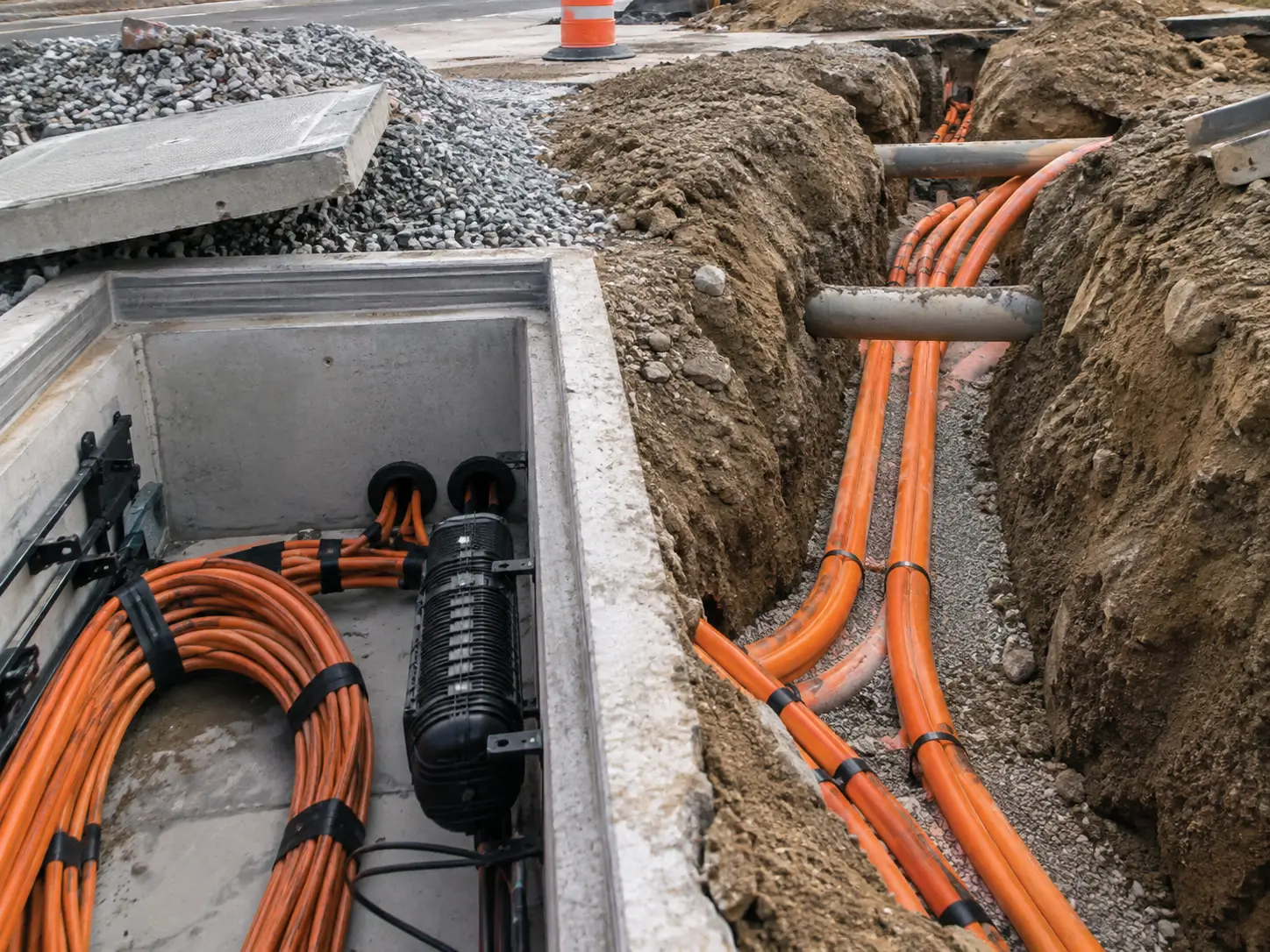

Underground utility construction requires careful planning, skilled crews, proper equipment, and strict attention to safety.
The success of the project depends on accurate utility locating, smart trenching practices, code compliance, and proper backfilling.
By following proven best practices, contractors can reduce delays and improve long-term performance.
Underground utility construction plays a critical role in modern infrastructure. From power and communications to water, sewer, and gas systems, these hidden networks keep homes, businesses, and communities running every day. Because these systems are installed below the surface, proper construction practices are essential. A mistake underground can lead to service disruptions, safety issues, and future access problems.
The first step in any underground utility project is thorough planning. Before work begins, contractors should review everything pertaining to the build, from engineering drawings to local code requirements. It is also important to coordinate with utility providers, municipalities, property owners, and other contractors working on the site. Clear communication early in the process helps prevent scheduling conflicts, design issues, and unexpected obstacles once excavation begins.
Utility locating is one of the most important safety steps. Crews should always contact the appropriate utility marking service before digging and verify the location of existing underground lines. In many cases, potholing or daylighting may be needed to physically confirm the depth and location of utilities. This is especially important in congested areas where electric, water, gas, fiber, and sewer lines may be located close together.
Choosing the right excavation method is another key factor. Traditional trenching may be appropriate for open areas, while directional boring or horizontal drilling may be better for projects that need to cross roads, sidewalks, parking lots, or landscaped areas with minimal disruption. The best method depends on soil conditions, depth, utility type, project budget, and site access.
Safety should remain the top priority throughout the project. Trenches must be properly sloped, shored, or shielded according to applicable safety standards. Crews should use proper personal protective equipment and follow safety standards. Open trenches, heavy machinery, and underground hazards create serious risks, so daily safety checks are essential.
Proper installation is just as important as excavation. Utility lines, conduit, and piping should be installed at the correct depth, slope, spacing, and separation from other utilities. Bedding material should be placed correctly to support the utility and prevent damage. Warning tape, tracer wire, and markers should be installed where required to make future locating and maintenance easier.
Backfilling and compaction must also be handled carefully. Poor backfill practices can cause settling, pavement damage, drainage issues, or utility failure over time. Contractors should use approved backfill materials, compact in lifts, and restore the surface properly based on the project requirements. Final documentation, including as-built drawings and photos, should be completed before the project is closed out.
When your project depends on safe, accurate underground utility construction, you need a contractor who understands the details before the work ever begins. Nantze Electric Co. brings the planning, equipment, and field experience needed to install underground infrastructure the right way. Contact Nantze Electric Co. today to discuss your next underground utility construction project and make sure it’s built to last!
Utility locating helps prevent accidental damage to existing electric, gas, water, sewer, and communication lines. It protects workers, avoids service outages, and reduces costly project delays.
Trenching involves opening the ground to install utilities, while directional boring installs utilities underground with minimal surface disruption. Boring is often used under roads, driveways, sidewalks, and landscaped areas.
Depth requirements vary based on the type of utility, local codes, soil conditions, and project specifications. A qualified contractor should always follow applicable regulations and engineering plans.
Common causes include poor planning, inaccurate utility locating, improper bedding, inadequate compaction, code violations, and lack of coordination between contractors.
Experienced contractors understand safety requirements, installation standards, equipment needs, and site coordination. This helps ensure the utility system is installed correctly and built to last.