
Fiber installation requires careful planning and the right installation method.
Experienced contractors understand how to protect fiber lines from damage during and after installation.
Contractors must account for certain factors to accommodate future maintenance needs.
A well-installed fiber system supports faster connectivity, fewer disruptions, and easier future expansion.
Fiber optic infrastructure has become essential for modern businesses, municipalities, schools, healthcare facilities, and data centers. As demand for faster and more reliable connectivity continues to grow, proper fiber installation is more important than ever. While fiber cable may seem simple from the outside, installing it correctly requires technical knowledge, construction experience, and careful coordination.
Expert contractors understand that fiber installation is not just about getting cable from one point to another. The installation must protect the cable, support performance, meet project requirements, and allow for future service or expansion. A poorly planned installation can lead to damages and expensive rework.
Every successful fiber installation begins with a clear plan. Contractors must evaluate the route, review existing utility maps, inspect site conditions, and identify potential obstacles before work begins. This includes sidewalks, roads, landscaping, buildings, drainage systems, underground utilities, and other infrastructure that may affect installation.
An experienced contractor also thinks about access points. These locations make it easier to pull cable, perform splicing, troubleshoot issues, and expand the system later. Without proper planning, even a functional fiber installation can become difficult to maintain.
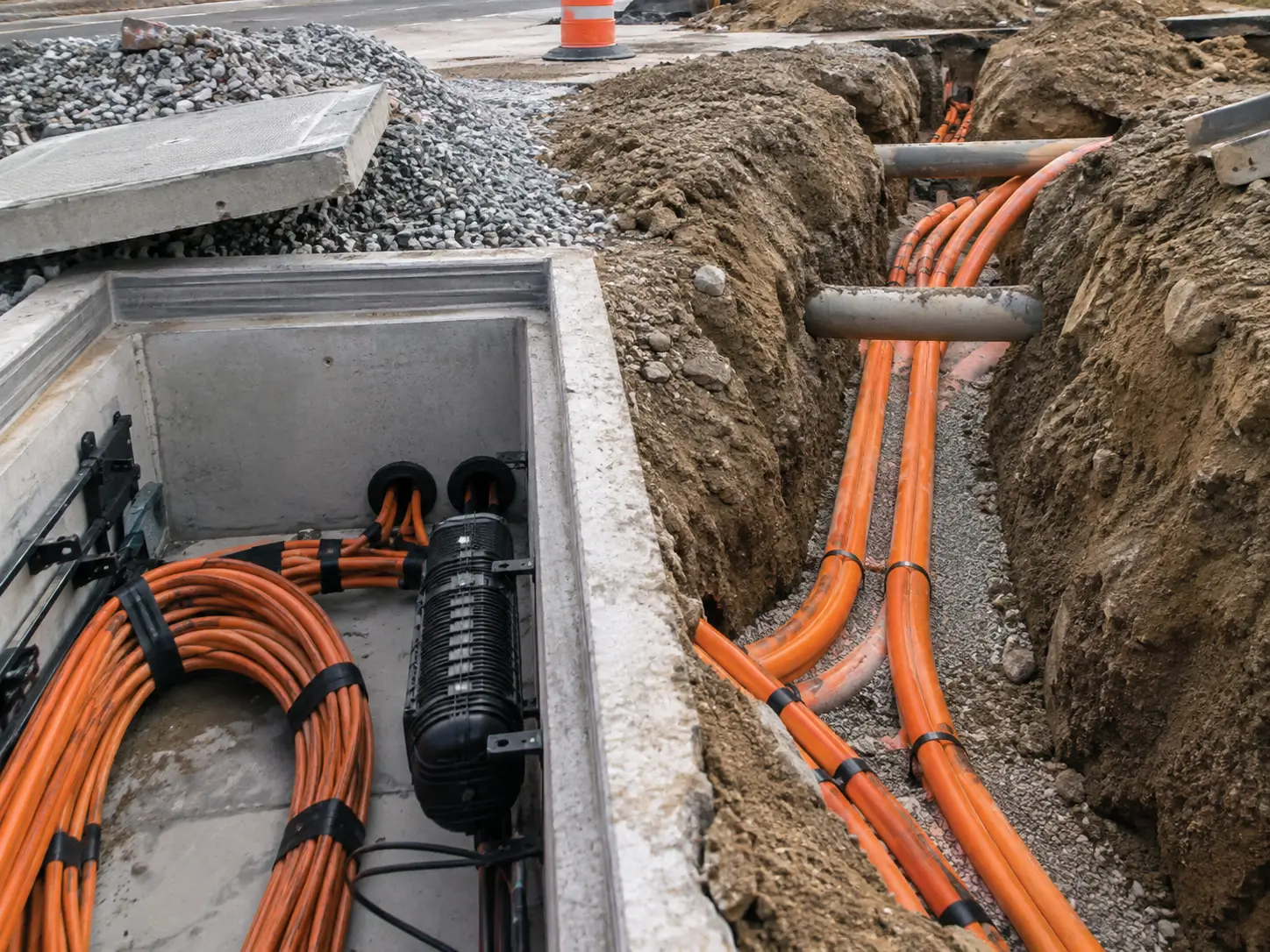
Fiber can be installed using several methods, including trenching, plowing, microtrenching, aerial installation, and directional boring. Each method has advantages depending on the project site, distance, surface conditions, and disruption limits.
Directional boring is often used when fiber needs to cross roads, sidewalks, driveways, or landscaped areas without opening a large trench. Trenching may be appropriate for open ground or new construction sites where surface disruption is less of a concern. Expert contractors know how to choose the best method for the environment instead of forcing a one-size-fits-all approach.
Fiber optic cable is durable, but it still has specific handling requirements. Contractors must avoid excessive pulling tension, sharp bends, crushing pressure, and improper storage. Bend radius is especially important because tight bends can damage the fiber or reduce signal quality.
Experienced crews use proper pulling equipment, lubricants when needed, and controlled installation techniques to protect the cable. They also understand how conduit size, pathway design, and cable length affect the installation process. Small mistakes during installation can create performance problems that may not show up until testing or after the system is in use.
Once fiber is installed, the work is not finished. Testing helps confirm that the cable performs as expected and that splices, terminations, and connections are working properly. Documentation is also important — as-built drawings, route notes, photos, labeling, and test results help owners and maintenance teams understand exactly what was installed.
Good documentation makes future repairs, upgrades, and expansions much easier. It also reduces confusion when multiple contractors or utility providers are working in the same area.
A reliable fiber installation starts with the right plan and the right contractor. Nantze Electric Co. has the experience to coordinate fiber routes, underground pathways, conduit, access points, and long-term infrastructure needs. Contact Nantze Inc. today to discuss your fiber installation project and build a system that is organized, dependable, and ready for the future!
An experienced contractor understands route planning, cable protection, installation methods, testing, and documentation. This helps reduce the risk of damage, downtime, and future repair problems.
The best method depends on the site. Trenching, directional boring, and microtrenching may all be appropriate depending on the distance, surface conditions, existing utilities, and project requirements.
Yes. Fiber can be damaged by excessive pulling force, sharp bends, crushing, poor conduit placement, or improper handling. That is why trained crews and proper equipment are important.
Testing confirms that the fiber is performing correctly and helps identify problems with splices, terminations, or cable damage before the system is fully placed into service.
A complete project should include route information, as-built drawings, access point locations, labeling, photos when helpful, and test results.


