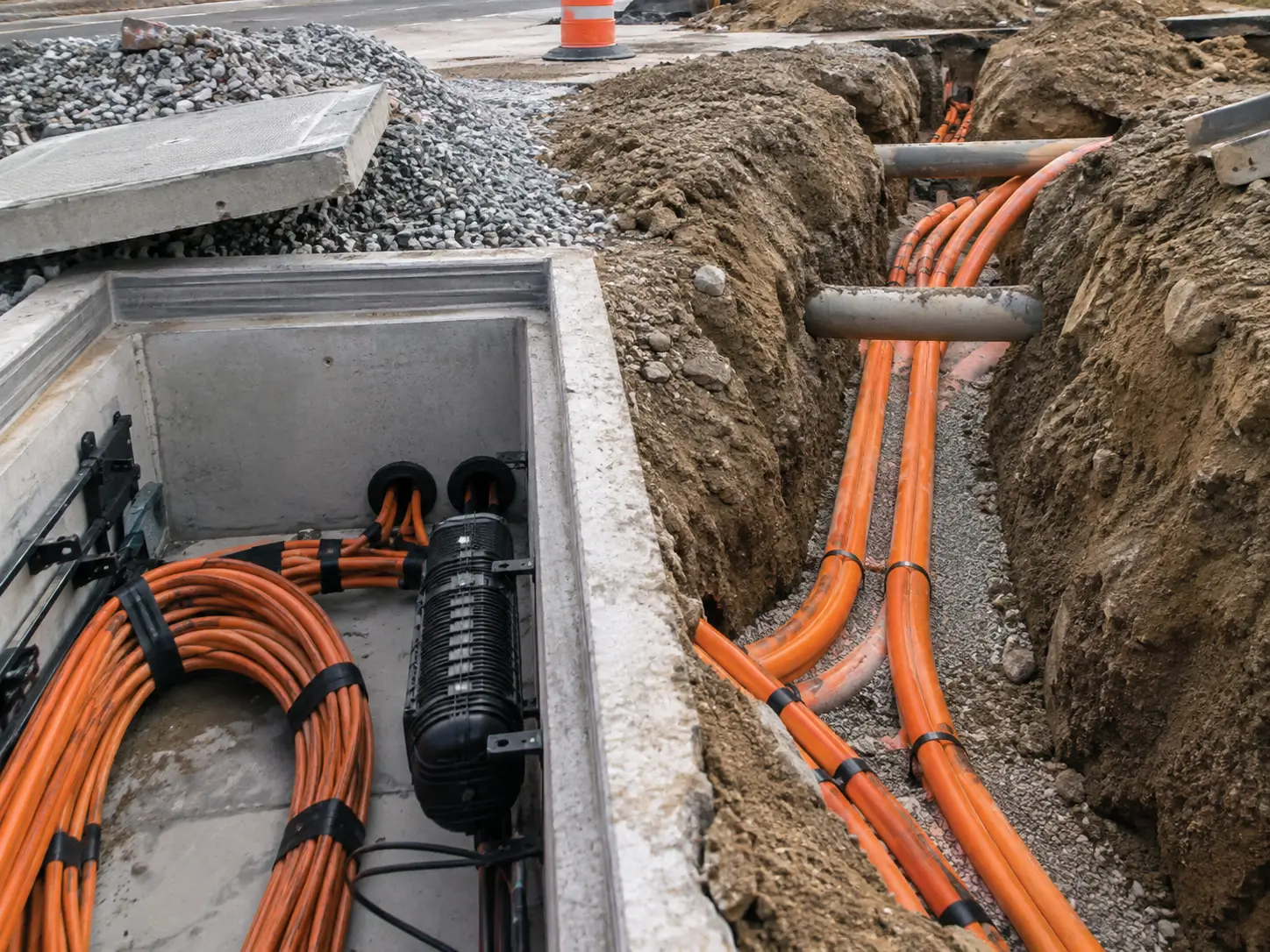

Commercial telecom installation should begin with a clear review of your building, business needs, and future growth plans.
Experienced contractors help coordinate everything from cabling to fiber, conduit, equipment rooms, pathways, and service provider requirements.
A strong telecom installation plan improves reliability and long-term maintenance.
Proper labeling, testing, and documentation are essential for future troubleshooting and upgrades.
The right contractor can help prevent delays, downtime, and unnecessary costs.
Commercial telecom installation is a critical part of building a reliable business communication system. Whether you are opening a new office, upgrading an existing facility, or expanding a campus, your telecom infrastructure affects a variety of your operations, it's important that it's done right.
A good telecom installation is not just about running cable through a building. It requires planning, coordination, and careful installation. The goal is to create a system that works today while also supporting future technology needs.
Before installation begins, your contractor should evaluate your current needs and future goals. This includes assessing all the users, devices, and equipment that will rely on the telecom system.
The plan should also account for the building layout. Offices, warehouses, medical facilities, retail spaces, schools, and industrial sites all have different telecom requirements. A qualified contractor can identify where cable pathways and access points should be placed. Planning early helps prevent common issues that can hinder your daily business operations.
Commercial telecom systems may include structured cabling, fiber optic cable, copper data cable, coaxial cable, conduit, cable trays, network racks, patch panels, and grounding systems. The right materials depend on the size of the facility and the type of equipment being used.
Fiber is often used for high-speed connections between buildings, floors, or systems. Copper cabling is commonly used for workstation connections and local network devices. An experienced contractor can recommend the right combination so the system is efficient, organized, and built to last.
Telecom installation often requires coordination between multiple parties. Internet service providers, electricians, general contractors, IT teams, property managers, and security vendors may all be involved.
A skilled telecom contractor understands how to coordinate these moving parts.
They can help confirm demarcation points, conduit routes, any critical requirements, and installation timelines. This reduces confusion and helps prevent delays during construction or tenant buildouts.
Once installation is complete, every cable and connection should be tested. Testing helps confirm that the system performs correctly and identifies problems before the business depends on the network.
Labeling is equally important.
Clearly marked cables, ports, racks, and panels make troubleshooting and future upgrades much easier. Your contractor should also provide documentation such as cable maps, as-built notes, test results, and equipment locations.
No matter what project you're working on, Nantze Electric Co. can help you get quality telecom infrastructure in place. From conduit and cabling pathways to coordination with other trades and service providers, we help make sure your system is installed cleanly and correctly. Contact Nantze Electric Co. today to discuss your commercial telecom installation project.
Commercial telecom installation is the process of installing the cabling, fiber, conduit, equipment racks, network pathways, and related infrastructure needed for business communication systems.
You should involve a contractor as early as possible, especially during new construction, remodeling, office relocation, or major technology upgrades.
Offices, warehouses, schools, medical facilities, retail centers, industrial sites, data centers, and multi-tenant commercial properties all rely on telecom infrastructure.
Structured cabling creates an organized, scalable system that supports phones, computers, Wi-Fi, cameras, access control, and other network-connected devices.
A complete telecom project should include tested connections, labeled cables and ports, organized equipment areas, and documentation for future maintenance.